Industrial Construction Assessment
- Home
- Industries

Industrial construction is a fundamental driver of economic growth, infrastructure development, and industrialization in Bangladesh. Over the last two decades, the country has transformed into a major manufacturing hub, particularly in sectors such as ready-made garments, pharmaceuticals, food processing, steel manufacturing, cement production, power generation, and logistics. This rapid industrial expansion has significantly increased the demand for modern industrial facilities that meet international standards for safety, productivity, energy efficiency, and environmental sustainability. Consequently, industrial construction assessment has become an essential process for evaluating the quality, functionality, compliance, and long-term viability of industrial projects.
An industrial construction assessment involves a systematic review of all project phases, including planning, design, engineering, procurement, construction, commissioning, and operational readiness. The objective is to identify potential risks, ensure compliance with regulatory requirements, verify engineering integrity, and optimize project performance. In Bangladesh, industrial projects often face challenges related to land availability, utility infrastructure, environmental compliance, skilled labor shortages, and evolving regulatory frameworks. Therefore, comprehensive assessment methodologies are necessary to ensure that industrial facilities achieve their intended operational objectives while minimizing financial and technical risks.
From an engineering perspective, industrial construction assessment covers multiple disciplines including civil engineering, structural engineering, electrical engineering, mechanical engineering, fire protection engineering, environmental management, and occupational health and safety. The assessment process also considers economic feasibility, sustainability goals, lifecycle costs, and future expansion requirements. As Bangladesh continues to attract foreign direct investment and expand its industrial base through economic zones and industrial parks, effective construction assessment practices will play a critical role in supporting sustainable industrial development and enhancing global competitiveness.
Bangladesh has experienced remarkable industrial growth driven by increasing domestic demand, export-oriented manufacturing, government incentives, and infrastructure development initiatives. Industrial construction activities are concentrated in major regions such as Dhaka, Gazipur, Narayanganj, Chattogram, Mymensingh, Khulna, and various special economic zones established to attract local and international investors. These developments have created significant opportunities for industrial builders, engineering consultants, contractors, equipment suppliers, and utility providers.
The industrial construction sector encompasses a diverse range of facilities including manufacturing plants, warehouses, logistics centers, processing facilities, power plants, pharmaceutical factories, steel mills, textile industries, and food production units. Modern industrial facilities require sophisticated engineering systems capable of supporting high production volumes, automated operations, and stringent quality control requirements. Consequently, construction projects have become increasingly complex and require multidisciplinary coordination throughout the project lifecycle.
One of the key characteristics of industrial construction in Bangladesh is the growing adoption of international engineering standards and best practices. Investors and multinational corporations increasingly demand compliance with recognized standards such as IEC, IEEE, ISO, NFPA, and occupational safety regulations. This trend has elevated the importance of detailed project assessments to verify compliance and ensure operational reliability. Furthermore, government initiatives aimed at improving energy efficiency, environmental performance, and workplace safety have encouraged industrial developers to invest in higher-quality infrastructure and advanced engineering solutions. As a result, industrial construction assessment has evolved from a simple quality control exercise into a strategic management tool that supports long-term business success.
Industrial construction assessment serves as a critical mechanism for ensuring that industrial facilities are designed, constructed, and operated according to established technical, financial, environmental, and safety requirements. Without comprehensive assessment procedures, industrial projects may encounter significant issues such as structural failures, electrical hazards, operational inefficiencies, regulatory violations, and excessive maintenance costs. Therefore, assessment activities must be integrated into every stage of project development.
From a financial perspective, industrial construction projects involve substantial capital investment. Investors, lenders, and project stakeholders require assurance that construction activities are progressing according to approved designs, specifications, schedules, and budgets. Assessment processes provide valuable insights into project performance, enabling decision-makers to identify deviations and implement corrective actions before problems escalate. This proactive approach reduces project risks and improves overall investment outcomes.
Engineering assessments also play a vital role in maintaining safety and operational reliability. Industrial facilities often contain high-voltage electrical systems, heavy machinery, hazardous materials, and complex process equipment. Any deficiencies in design or construction can result in accidents, equipment failures, production losses, and environmental incidents. Through systematic inspections, testing, and verification procedures, construction assessments help ensure that all systems function safely and efficiently.
In addition to technical and financial benefits, industrial construction assessment contributes to sustainability objectives by evaluating energy performance, resource utilization, environmental impact, and lifecycle efficiency. As global industries increasingly prioritize sustainable development, assessment methodologies have expanded to include environmental, social, and governance considerations. Consequently, industrial construction assessment has become an indispensable tool for achieving operational excellence, regulatory compliance, and long-term business sustainability in Bangladesh's rapidly evolving industrial sector.
Electrical engineering assessment represents one of the most critical components of industrial construction evaluation because electrical systems directly influence productivity, reliability, safety, and energy efficiency. Industrial facilities depend on stable and continuous power supplies to operate manufacturing equipment, automation systems, lighting networks, HVAC installations, and auxiliary services. Any deficiencies in electrical infrastructure can lead to production interruptions, equipment damage, and significant financial losses.
The assessment process begins with load analysis to determine the facility's power demand and distribution requirements. Engineers evaluate connected loads, demand factors, diversity factors, motor starting characteristics, and future expansion needs. Accurate load calculations are essential for selecting appropriate transformers, switchgear, cables, generators, and protection systems. For three-phase industrial systems, power calculations commonly utilize:
P = √3 × V × I × cosφ
Where P represents power, V is voltage, I is current, and cosφ is the power factor. This relationship forms the foundation for electrical system sizing and performance evaluation.
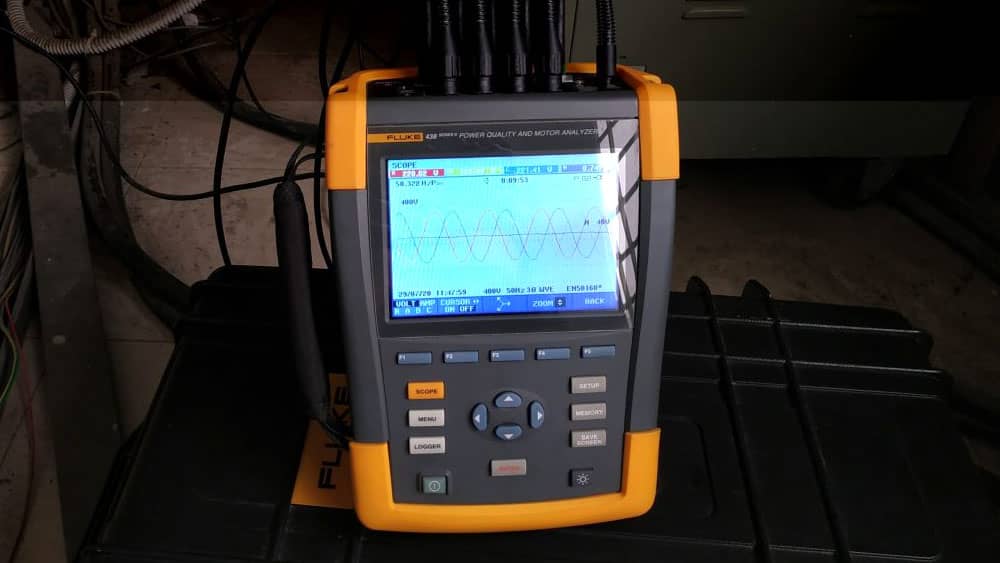
Electrical assessments also examine transformer installations, medium-voltage distribution networks, low-voltage switchboards, motor control centers, grounding systems, lightning protection systems, and backup power arrangements. Protection coordination studies verify that circuit breakers, relays, and protective devices operate correctly during fault conditions. Furthermore, power quality assessments evaluate voltage stability, harmonics, power factor performance, and transient disturbances that may affect sensitive industrial equipment.
Given Bangladesh's growing industrial power demand and occasional grid stability challenges, many facilities incorporate captive power generation, solar energy systems, and energy management solutions. Comprehensive electrical assessments ensure these systems operate efficiently while meeting applicable safety and performance standards. Through rigorous evaluation and testing, electrical engineering assessments contribute significantly to operational reliability, worker safety, and long-term facility performance.
Industrial construction assessment has emerged as a strategic requirement for ensuring the successful development and operation of industrial facilities in Bangladesh. As industrialization continues to accelerate across the country, project stakeholders face increasing pressure to deliver facilities that meet international standards for quality, safety, efficiency, and sustainability. Comprehensive assessment methodologies provide the framework necessary to achieve these objectives while minimizing technical, financial, and operational risks.
The effectiveness of industrial construction assessment depends on a multidisciplinary approach that integrates civil, structural, electrical, mechanical, environmental, and safety considerations. Each engineering discipline contributes unique insights into project performance, enabling stakeholders to identify deficiencies, optimize designs, and improve operational readiness. Among these disciplines, electrical engineering assessments play a particularly important role due to the critical nature of power systems in modern industrial operations.
Looking ahead, emerging technologies such as Building Information Modeling (BIM), digital twins, smart sensors, industrial Internet of Things (IIoT) platforms, artificial intelligence, and predictive analytics are expected to transform construction assessment practices. These innovations will provide more accurate, real-time insights into project performance and asset conditions, supporting data-driven decision-making throughout the facility lifecycle.
For Bangladesh, the continued adoption of advanced assessment practices will strengthen industrial competitiveness, attract investment, improve safety performance, and support sustainable economic development. Organizations that prioritize comprehensive industrial construction assessments will be better positioned to achieve long-term operational success while meeting the evolving demands of a rapidly changing industrial landscape.
