Lightning Risk Assessment
- Home
- Solutions

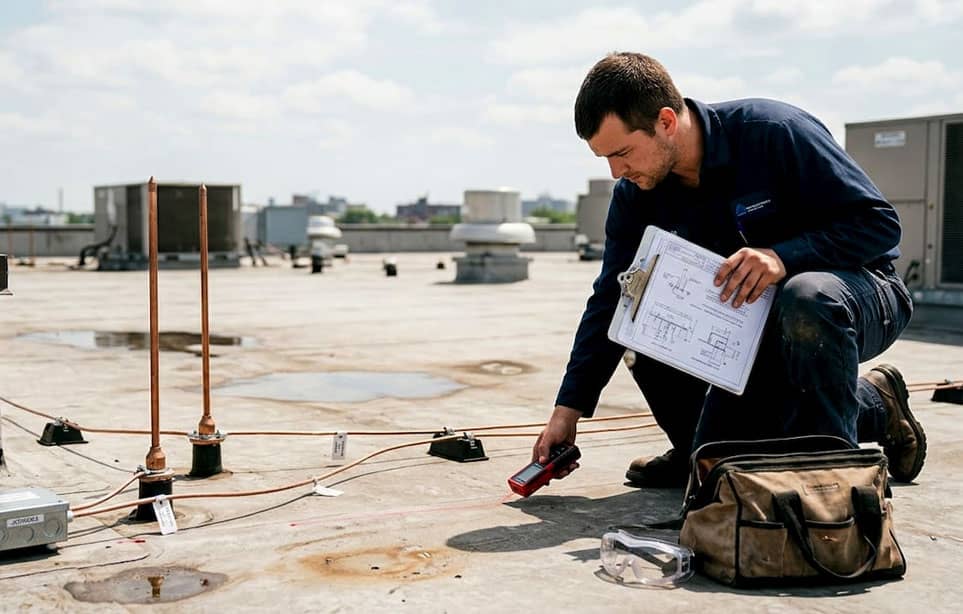
Lightning Risk Assessment in Bangladesh is becoming increasingly important for modern industries, commercial buildings, and infrastructure because of the high frequency of thunderstorms during the monsoon season. In a country like Bangladesh, lightning is not just a weather event it is a serious electrical safety risk that can damage transformers, control panels, production machinery, and entire industrial power systems within seconds. For industries such as garments, textiles, manufacturing plants, warehouses, and commercial complexes, lightning-related electrical surges can lead to production downtime, costly equipment failure, and even fire hazards.
Every year, many industrial facilities experience unexpected electrical damage caused by lightning-induced surges traveling through power lines or grounding systems. Even when a lightning strike does not directly hit a building, nearby strikes can still create high-voltage transients that silently damage sensitive electrical and electronic systems. This makes proper risk evaluation essential for protecting both human life and industrial assets.
Unique Prime Engineering Solutions provides professional lightning risk assessment and protection solutions for industrial and commercial facilities across Bangladesh, helping industries reduce electrical risks and improve operational safety.
Lightning does not always need a direct strike to cause serious damage. In many cases, indirect strikes or nearby lightning activity can generate powerful voltage surges that travel through incoming power lines, communication cables, and grounding networks. These surges can damage equipment instantly or gradually weaken electrical systems over time without any visible warning signs.
In industrial environments where machinery operates continuously, even a small electrical disturbance can interrupt production processes. Modern factories rely heavily on automated systems, PLCs, VFDs, and sensitive control panels, all of which are highly vulnerable to transient voltage surges caused by lightning activity.
Another important factor is that lightning risk is not limited to rooftop exposure. It also depends on grounding quality, surge protection design, electrical system layout, and environmental exposure conditions. A complete lightning risk assessment evaluates all these factors together to determine the actual vulnerability level of a facility.
Bangladesh experiences frequent thunderstorms, especially during the monsoon season, making lightning protection a critical requirement for industrial safety. Without proper risk assessment, industries remain exposed to unpredictable electrical failures that can disrupt operations and cause financial losses.
One of the biggest concerns is equipment damage caused by sudden voltage surges. Transformers, control panels, distribution boards, and automation systems are highly sensitive to these disturbances. When lightning energy enters an electrical system, it can instantly damage insulation, burn components, or completely shut down production systems.
Production downtime is another major issue. In industries like garments and textiles, even a few hours of interruption can affect shipment schedules and create serious operational delays. Lightning-related disruptions often occur without warning, making preventive assessment extremely important.
Fire risk is also a significant concern. Electrical surges caused by lightning can generate excessive heat inside panels and wiring systems, increasing the chance of electrical fires. This makes lightning risk assessment not only a technical requirement but also a life safety measure for workers and infrastructure.
A lightning risk assessment is a structured engineering evaluation designed to measure how vulnerable a facility is to lightning strikes and surge-related damage. It involves detailed analysis of structural design, electrical systems, grounding networks, and environmental exposure conditions.
The main purpose of this assessment is to identify weak points in the system and recommend proper protection measures such as lightning protection systems, surge protection devices, and improved earthing solutions.
A professional assessment generally includes site inspection, risk calculation, electrical system evaluation, grounding analysis, and surge protection review. It also considers the type of industrial operations, equipment sensitivity, and overall safety requirements of the facility.
During a detailed lightning risk assessment, engineers evaluate the structural and electrical characteristics of the facility to understand overall risk exposure. Building height, construction type, roof material, and surrounding environment are analyzed to determine how likely the structure is to attract lightning strikes.
Electrical systems are also carefully examined, including transformers, HT/LT panels, generators, and distribution networks. Any weakness in insulation, grounding, or protection coordination increases vulnerability during lightning events.
Grounding systems play a critical role in safely dissipating lightning energy into the earth. Poor grounding resistance or weak bonding connections can significantly increase the risk of electrical damage. Surge protection devices are also reviewed to ensure they are correctly installed and properly rated for industrial loads.
Lightning-related electrical disturbances can have serious operational impacts on industrial facilities. Sensitive electronic systems such as PLCs, control panels, and automation units are especially vulnerable to sudden voltage spikes. When these systems fail, entire production lines may stop instantly.
Transformers and power distribution equipment are also at high risk. Lightning surges can damage internal windings, insulation systems, and protective relays, requiring expensive repairs or replacements. In many cases, the damage is not immediate but develops over time due to repeated exposure to smaller surges.
Even when equipment continues to operate, hidden damage can reduce efficiency, increase maintenance requirements, and shorten overall system lifespan. This makes preventive assessment extremely important for long-term operational stability.
A properly designed lightning protection system helps safely capture and discharge lightning energy into the ground, preventing it from entering critical electrical systems. When combined with surge protection devices and an effective grounding network, it creates a complete protection framework for industrial facilities.
However, proper installation alone is not enough. Regular inspection and maintenance are necessary to ensure the system continues to function effectively. Many industries install protection systems but fail to maintain them, which reduces their efficiency over time.
A well-designed system ensures safe energy discharge, protects electrical infrastructure, reduces fire risk, and improves overall operational reliability during storm conditions.
A professional lightning risk assessment helps industries significantly reduce the risk of unexpected electrical failures caused by lightning activity. It identifies weak points in electrical systems and allows corrective actions before actual damage occurs.
It also improves overall electrical safety by ensuring proper grounding, surge protection, and system coordination. This leads to more stable and reliable industrial operations, especially during high-risk weather seasons.
Another major advantage is cost savings. Preventing lightning damage is far more economical than repairing or replacing expensive industrial equipment. It also helps reduce downtime and improve production continuity.
Additionally, lightning risk assessment supports safety compliance and improves readiness for industrial safety audits, especially in export-oriented sectors where electrical safety standards are strictly monitored.
Unique Prime Engineering Solutions provides professional lightning risk assessment services designed specifically for industrial and commercial environments in Bangladesh.
The company focuses on practical engineering analysis, real-world risk evaluation, and effective protection recommendations tailored to industrial operating conditions. Services include site inspection, grounding assessment, surge protection evaluation, and detailed technical reporting to support decision-making.
With a strong engineering approach and industrial safety focus, the goal is to help businesses reduce electrical risks and improve long-term operational reliability.
Lightning Risk Assessment in Bangladesh is an essential safety requirement for industries operating in a high-risk thunderstorm environment. It helps identify vulnerabilities in electrical systems, improve grounding and surge protection, and reduce the risk of equipment damage, fire hazards, and production downtime.
For industries that depend on continuous operations, lightning protection is not just a technical option—it is a critical investment in safety, reliability, and business continuity. Unique Prime Engineering Solutions provides professional assessment services that help industries stay protected, efficient, and operationally secure even during severe weather conditions.
